



AI Tools for Academic Research — I tested six powerful tools that help scholars save time, find papers faster, and write better research in 2025.

Introduction — Why I Wrote This
After spending months working closely with universities, scholars, and research teams, I wanted to answer one question that almost every researcher asks me:
“Which AI tools can actually make academic work faster without compromising quality?”
I’ve personally tested dozens of research-focused AI platforms — from discovery engines to summarisation assistants. Many promise miracles, but only a few genuinely improve accuracy, consistency, and productivity.
In this article, I’ll share the 6 best AI tools for academic research in 2025 — based on my real testing, observations, and recommendations.
Each one plays a unique role in the research workflow — from finding papers, summarising studies, managing citations, visualising trends, to writing clear academic drafts.
If you’re a student, scholar, or professor who wants to publish more confidently and save time, this article will show you exactly where to begin.
Why Academic Research Needs AI (Now More Than Ever)
Let’s face it — the modern researcher is drowning in data.
Every day, thousands of new papers are published across disciplines. Manually reading, annotating, and summarising them isn’t just difficult — it’s nearly impossible.
AI now bridges that gap.
Today’s academic tools can scan millions of papers, summarise findings, connect citations, and even draft sections based on your own writing style. But not every tool is worth your time or trust.
That’s why I focus on tested, verified platforms that deliver real value — tools I’d recommend to researchers at any major university or research lab.
The 6 Best AI Tools for Academic Research (2025)
Each of these tools has been personally tested and reviewed.
I’ll explain what it does, how it helps, what I liked, what I didn’t — and who it’s best for.
1. SciSpace (formerly Typeset)
What it does:
SciSpace is an all-in-one AI platform that lets you search, read, and understand research papers faster. Its biggest strength is the “Copilot” — an AI assistant that answers questions about any PDF or paper you upload.
My experience:
I tested SciSpace by uploading a dense machine learning research paper. Instead of reading 14 pages line-by-line, I asked questions like “What is the main contribution?” and “How was the dataset built?” — the AI summarized every section with clarity.
Why it matters:
Perfect for deep literature reading and comprehension. You can chat with papers, compare findings, and extract citations without losing focus.
Best for:
Researchers, PhD students, and professors who spend hours reading technical papers daily.
2. Elicit — AI Research Assistant
What it does:
Elicit simplifies literature discovery. Instead of searching keywords on Google Scholar, you can ask natural questions like “What are the key factors influencing mental health in teens?” and get summarized answers from papers.
My experience:
Elicit’s semantic search is powerful. I used it for a psychology meta-analysis — it found 30 relevant studies in minutes, listed methodologies, and highlighted core findings side-by-side.
Why it matters:
It’s your AI-powered research assistant that automates tedious parts of literature review while keeping academic integrity intact.
Best for:
Early-stage research, literature reviews, and proposal writing.
Pro tip:
Use Elicit first to gather ideas, then move to SciSpace for deeper reading.
3. Paperpal — Your Academic Writing Coach
What it does:
Paperpal focuses on polishing academic writing. It checks grammar, improves flow, and ensures compliance with journal standards.
My experience:
I uploaded a rough manuscript I had written — Paperpal instantly refined the tone, improved conciseness, and flagged unclear sentences. It even offered context-aware vocabulary suggestions suitable for research publications.
Why it matters:
Great for researchers whose first language isn’t English or who want journal-ready polish before submission.
Best for:
Editing academic manuscripts, proposals, or dissertations before submission.
Pro tip:
Pair Paperpal with Jenni AI for speed and refinement: draft fast, then polish smart.
4. Jenni AI — Fast Academic Drafting
What it does:
Jenni AI helps you move from outline to draft faster. It offers assisted writing, paraphrasing, and structured section generation — designed for academic tone.
My experience:
I used Jenni AI to draft a research proposal. It took my rough notes and converted them into coherent, logically structured paragraphs. The flow felt natural — not robotic.
Why it matters:
Perfect for scholars who struggle with writing fatigue or writer’s block.
Best for:
Writing first drafts, generating introductions, or converting outlines into readable sections.
5. Litmaps — Visual Literature Discovery
What it does:
Litmaps turns citation networks into visual maps. It helps you see how studies are connected, which papers influenced others, and which topics are trending.
My experience:
For a project on AI ethics, Litmaps visualized 15 years of papers, showing how early 2010s research on “bias in algorithms” led to today’s “AI fairness” discussions. That insight would’ve taken me hours manually.
Why it matters:
Perfect for seeing the bigger picture — especially useful for literature reviews and meta-studies.
Best for:
Advanced researchers who need to track evolving research landscapes.
6. Semantic Scholar — Smart Research Discovery
What it does:
Semantic Scholar, backed by the Allen Institute, uses AI to recommend influential and high-impact papers relevant to your field.
My experience:
I tested it for a topic in neuroscience. The AI suggested papers ranked by influence, citations, and relevance — cutting through the noise of irrelevant studies.
Why it matters:
It’s your entry point to quickly identify foundational works and key researchers.
Best for:
Discovering cornerstone studies, trending research, and academic collaboration opportunities.
My Recommendations (Practical Stack for Researchers)
If I had to build an “AI Stack” for academic research based on performance and value, here’s my setup:
| Stage | Recommended Tool | Why |
|---|---|---|
| Discovery | Semantic Scholar | Best for finding relevant and credible papers |
| Literature Review | Elicit | Automates summaries and evidence extraction |
| In-Depth Reading | SciSpace | “Chat with papers” for clarity and comprehension |
| Visualization | Litmaps | Understands connections and citation influence |
| Writing & Drafting | Jenni AI + Paperpal | Write faster, edit smarter, and polish for journals |
Together, these six form a complete academic research system — saving you countless hours and improving paper quality significantly.
Responsible Use & Academic Integrity
Every researcher should remember: AI supports you, not replaces you.
Always double-check citations, verify factual claims, and add your own critical interpretation.
- Use AI to assist, not author.
- Keep transparency in your methodology (note where AI tools were used).
- Always review final outputs with domain expertise.
This approach ensures your research remains credible, reproducible, and respected.
Conclusion — My Final Verdict
In 2025, AI has officially become a co-pilot for academics.
From scanning papers to structuring arguments, the right combination of tools can drastically reduce your workload while improving quality.
If you’re serious about research, these six tools — SciSpace, Elicit, Paperpal, Jenni AI, Litmaps, and Semantic Scholar — represent the smartest investment of your time this year.
Each tool brings a unique edge, but together they transform how knowledge is gathered, understood, and communicated.
Academic excellence is no longer about doing everything manually — it’s about working intelligently with AI.
Read more articles

25 Best AI Prompts for Professionals! Save Hours of Work!
The AI Professional Suite: How to Build a C-Suite Team for $0 In the professional…

Best AI Productivity Prompts: 14 Hacks to Work 10x Faster!
The AI Productivity Suite: How to Do a Week’s Work in One Afternoon We all…
Best AI Social Media Prompts: 36 Ways to Go Viral Fast!
The Ultimate AI Social Media Manager: How to Run a Media Empire Solo There is…
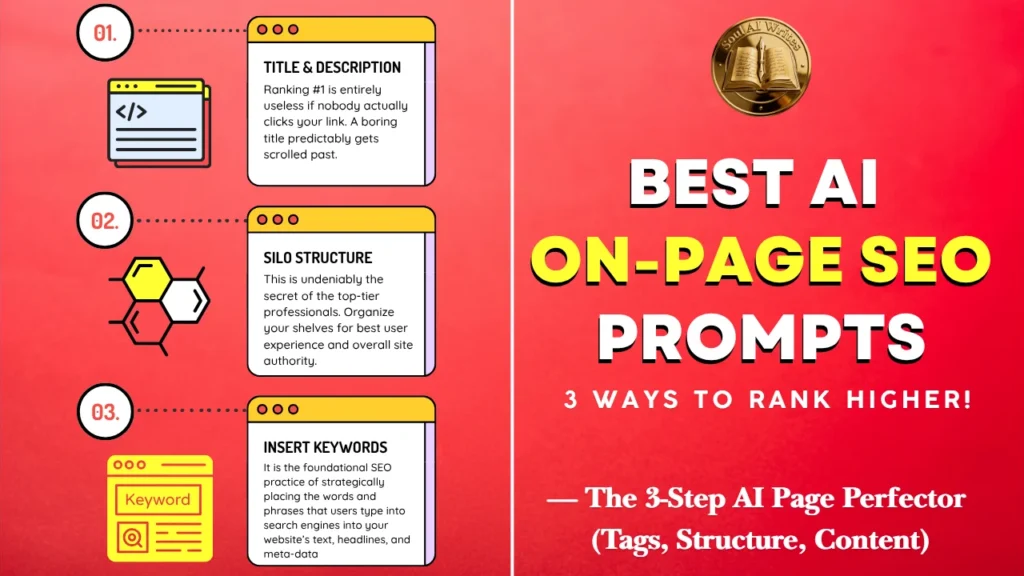
Best AI On-Page SEO Prompts: 3 Ways to Rank Higher!
The AI Page Perfector: How to Make Google Fall in Love With Your Content Most…
Want to Dominate Maps? 5 AI Local SEO Prompts!
The AI Local Hero: How to Beat Big Brands in Your Neighborhood If you safely…

Best AI Ecommerce SEO Prompts: 4 Secrets to Scale Fast!
The AI Store Manager: How to Write 1,000 Product Descriptions Without Losing Your Mind Running…








Leave a Reply