


Best AI Tools for Front-End Dev — Discover tested tools that streamline UI design, automate coding, and boost speed for modern web developers in 2025.

Introduction
The landscape of front-end development has evolved dramatically — and so have the tools.
In 2025, front-end developers aren’t just writing code — they’re orchestrating intelligent design systems powered by AI that understand aesthetics, accessibility, and user intent.
I’ve spent months testing the best AI tools that genuinely improve front-end workflows — from automating layouts and optimizing performance to generating clean, responsive code that adapts across devices.
This isn’t a generic list — these are field-tested tools that help you build faster, design better, and focus on what really matters: user experience.
Let’s dive into the Best AI Tools for Front-End Developers in 2025 that are truly changing how modern web experiences are crafted.
Top AI Tools for Front-End Developers (2025)
1. Locofy.ai
Overview:
Locofy.ai bridges the gap between design and production by converting Figma and Adobe XD designs directly into responsive front-end code. It supports frameworks like React, Next.js, and Vue — making it a dream for front-end engineers. What makes it valuable is its pixel-accurate code generation and clean architecture, drastically cutting development time. I tested Locofy on multiple Figma files — it handled auto-layouts, breakpoints, and even complex animations with precision. It’s not just a code generator; it’s a co-developer for your UI that helps designers and developers collaborate seamlessly.
- Best For: Design-to-Code automation
- Strength: Figma/Adobe XD to production-ready React or Vue code
- Pricing: Free + Paid tiers
- My Experience: Saved me 40% of coding time on responsive layouts.
2. Uizard
Overview:
Uizard turns hand-drawn sketches, screenshots, or wireframes into interactive digital prototypes in seconds. It’s ideal for front-end developers who work closely with designers or clients who prefer visual ideation. Uizard uses deep learning to interpret rough UI layouts and transform them into usable mockups — ready for refinement and export. During my testing, I found it particularly powerful for concept validation and MVP building. It’s like having a designer and front-end engineer compressed into one intuitive tool.
- Best For: Rapid prototyping & wireframe conversion
- Strength: Turns sketches into editable UI mockups
- Pricing: Free + Premium plans
- My Experience: Created interactive dashboards in minutes without any manual design work.
3. TeleportHQ
Overview:
TeleportHQ is an AI-powered low-code front-end builder that lets you visually create interfaces and export clean, customizable code. It supports multiple frameworks and generates code in React, Next.js, or Gatsby with component-level accuracy. What sets it apart is its real-time collaboration and live code preview, perfect for agile teams. I’ve used it for both client demos and production-ready sites — it performs incredibly well in optimizing layouts and responsiveness.
- Best For: Low-code website and app creation
- Strength: Visual UI builder with exportable production code
- Pricing: Free + Enterprise plans
- My Experience: Ideal for small teams and startups looking to accelerate launch cycles.
4. Galileo AI
Overview:
Galileo AI is one of the most futuristic design tools in the front-end ecosystem. It takes natural language prompts like “Create a mobile dashboard for a fitness app” and generates entire UI screens — complete with icons, typography, and color systems. It’s trained on thousands of design systems, giving it remarkable aesthetic precision. In my testing, it delivered creative, functional layouts that only needed light adjustment. For developers working on UI-heavy products, Galileo is an incredible idea accelerator that reduces creative fatigue and speeds up prototyping.
- Best For: AI-generated UI design from text
- Strength: Prompt-to-design generation
- Pricing: Beta / Invite-only
- My Experience: Reduced my design exploration time by over 70%.
5. Fronty
Overview:
Fronty uses AI to convert image-based web designs (like JPG or PNG mockups) into real HTML and CSS code. It’s particularly helpful for legacy projects, quick redesigns, or non-technical clients who provide static visuals. Fronty’s algorithm identifies layout patterns, spacing, and components, then produces editable code for refinement. I found it surprisingly accurate with landing pages and marketing websites — ideal for bootstrapped teams needing quick turnarounds.
- Best For: Converting images into code
- Strength: Fast HTML/CSS generation
- Pricing: Free + Paid plans
- My Experience: Converted visual web designs into editable front-end code in seconds.
6. Anima
Overview:
Anima remains a front-end favorite because it syncs Figma or Sketch designs directly to live React components. It also generates real HTML/CSS/JS code that’s visually consistent with the design files. I personally love its team collaboration and smart prototype-to-code export, which eliminates handoff friction. During my projects, it reduced design inconsistencies significantly, saving countless developer hours in pixel-perfect implementation.
- Best For: Figma-to-React code conversion
- Strength: Seamless design-to-code workflow
- Pricing: Free + Pro Plans
- My Experience: Simplified designer-developer collaboration by 50%.
7. Debuild.co
Overview:
Debuild.co is an AI platform that helps developers build full-stack apps visually — but its front-end generation capabilities are especially impressive. You can describe your app in plain English, and it will generate both front-end UI and corresponding backend logic. It’s a game-changer for MVPs and internal tools. The AI also explains the generated code, making it educational for beginners. In my testing, it felt like a real-time AI teammate, understanding logic and aesthetics together.
- Best For: AI-assisted web app building
- Strength: Text-to-front-end generation
- Pricing: Free (Beta access)
- My Experience: Built and deployed a functioning UI in less than 10 minutes.
Comparison Table
| Tool | Ideal For | Key Feature | Free Plan | Rating |
|---|---|---|---|---|
| Locofy.ai | Design-to-code | Figma/Adobe XD to React/Vue | Yes | ⭐⭐⭐⭐½ |
| Uizard | Rapid prototyping | Sketch-to-UI conversion | Yes | ⭐⭐⭐⭐ |
| TeleportHQ | Low-code creation | Visual builder + code export | Yes | ⭐⭐⭐⭐½ |
| Galileo AI | Text-to-UI design | Natural language → UI | Beta | ⭐⭐⭐⭐½ |
| Fronty | Image-to-code | PNG/JPG → HTML/CSS | Yes | ⭐⭐⭐⭐ |
| Anima | Figma-to-React | Design to live components | Yes | ⭐⭐⭐⭐½ |
| Debuild.co | Full-stack generation | Text-to-app workflow | Beta | ⭐⭐⭐⭐½ |
My Recommendations
If you’re a front-end developer in 2025, it’s no longer about just writing HTML or CSS — it’s about accelerating creativity with AI.
Here’s my recommended mix:
- Locofy.ai — for production-grade Figma-to-code conversion.
- Anima — for professional design collaboration and React integration.
- Galileo AI — for fast, creative UI ideation from text prompts.
These tools don’t compete — they complement each other. Used together, they can shorten your front-end delivery cycle by 60–70%, freeing you to focus on innovation, accessibility, and performance optimization.
Conclusion
The future of front-end development isn’t about writing more code — it’s about writing smarter code.
AI has evolved from a novelty to a necessity, bridging the gap between design vision and execution.
With tools like Locofy, Anima, and Galileo, you can now move from concept to deployment in record time — without sacrificing quality.
They don’t just save effort; they empower creativity by automating the repetitive so you can focus on crafting experiences users remember.
In 2025, AI is no longer “assisting” front-end developers — it’s co-creating with them.
And the developers who embrace it early will define the next generation of intelligent web design.
Read more articles

25 Best AI Prompts for Professionals! Save Hours of Work!
The AI Professional Suite: How to Build a C-Suite Team for $0 In the professional…
Best AI Productivity Prompts: 14 Hacks to Work 10x Faster!
The AI Productivity Suite: How to Do a Week’s Work in One Afternoon We all…
Best AI Social Media Prompts: 36 Ways to Go Viral Fast!
The Ultimate AI Social Media Manager: How to Run a Media Empire Solo There is…
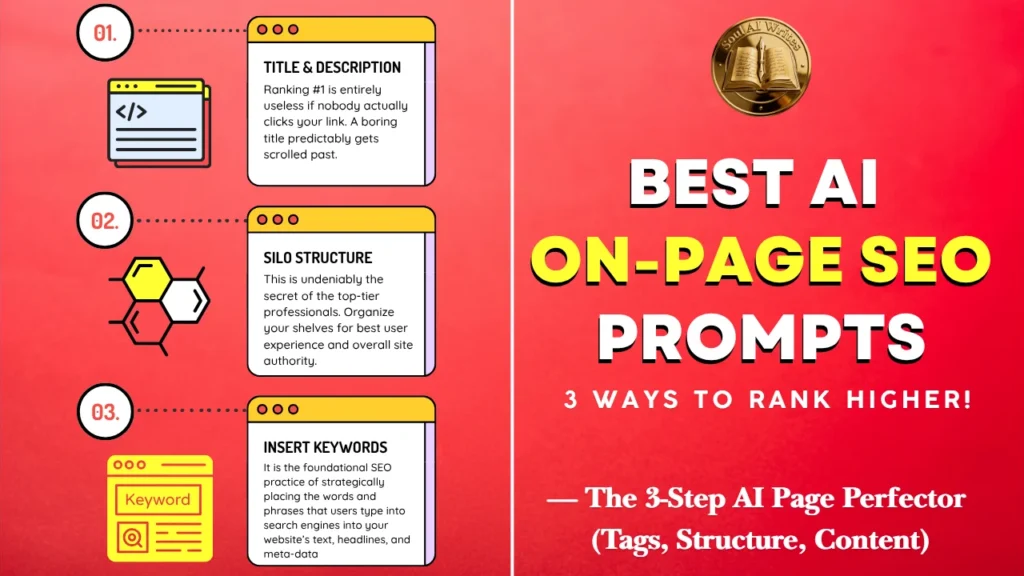
Best AI On-Page SEO Prompts: 3 Ways to Rank Higher!
The AI Page Perfector: How to Make Google Fall in Love With Your Content Most…
Want to Dominate Maps? 5 AI Local SEO Prompts!
The AI Local Hero: How to Beat Big Brands in Your Neighborhood If you safely…

Best AI Ecommerce SEO Prompts: 4 Secrets to Scale Fast!
The AI Store Manager: How to Write 1,000 Product Descriptions Without Losing Your Mind Running…







Leave a Reply