

Discover Gemini 3 AI Deep Think breakthrough: 1M token context, 91.9% GPQA score, Antigravity coding. Full pricing, benchmarks vs GPT-5, and real-world impact.

The Launch That Reset the AI Chessboard
On November 18, 2025, Google didn’t just release another AI model – they fired a precision-guided missile straight into the heart of the AI establishment. While the world was still digesting OpenAI’s GPT-5.1 and Anthropic’s Sonnet 4.5, Google dropped Gemini 3 AI, a system so comprehensively advanced that it immediately claimed the top spot on the LMArena leaderboard and sent shockwaves through Silicon Valley.
This isn’t iterative improvement. This is Google reminding everyone why they built the modern internet – and why they’re determined to own its AI-native successor.
What is Gemini 3 AI? Beyond the Hype
Gemini 3 represents Google’s most aggressive leap in foundation model architecture since the original Gemini launch. Built on a refined mixture-of-experts framework with enhanced cross-modal attention pathways, it’s designed from the ground up for what Google calls “unified cognition” – the ability to reason across text, images, audio, video, and code as seamlessly as a human brain processes sensory input. Read more
Core Architecture Breakthroughs:
- Deep Think Mode: A native reasoning layer that evaluates multiple solution paths, checks its own logic, and iterates before delivering final output.
- 1 Million Token Context: Input capacity for entire codebases, book libraries, or years of conversation history (64K token output).
- Native Multimodal Fusion: Unlike patched-together systems, Gemini 3 processes all modalities through shared representation layers.
- Generative UI Engine: Real-time interface generation that adapts responses to user needs without pre-programmed templates.
- Agentic Orchestration: Built-in capability to execute 50+ sequential tool calls across Google Workspace, web search, and third-party APIs.
The Features That Make Gemini 3 AI genuinely Revolutionary
1. Deep Think: The “Human-Like” Reasoning Layer
Most AI models are sophisticated pattern matchers. Gemini 3’s Deep Think mode is different – it’s a deliberative reasoning engine that mirrors human problem-solving.
How It Works:
When activated, Deep Think engages a secondary computation pathway that:
- Generates 3-5 candidate solution strategies
- Evaluates each against internal consistency checks
- Identifies potential edge cases and counterexamples
- Selects the most robust approach
- Delivers answer with reasoning trace
Benchmark Impact:
- Humanity’s Last Exam: 37.5% standard → 41% with Deep Think
- ARC-AGI-2: 45.1% (near-human performance)
- GPQA Diamond: 91.9% (PhD-level science reasoning)
Real-World Example:
A biotech researcher asked Gemini 3 to design a CRISPR experiment targeting a rare genetic mutation. Deep Think not only designed the protocol but identified three potential off-target effects, suggested control experiments, and cross-referenced against 47 recent papers – work that would take a postdoc three days, completed in 8 minutes.
2. The 1 Million Token Context: Memory That Never Forgets
While competitors tout 200K or 256K context windows, Gemini 3’s 1M token capacity is like handing your AI assistant a photographic memory spanning 750,000 words.
What This Enables:
- Legal Teams: Upload 500 contracts and ask for clause inconsistencies across the entire corpus.
- Film Production: Feed the entire script, storyboard, and 100 hours of dailies to generate editing suggestions.
- Enterprise Analytics: Connect three years of sales data, customer feedback, and market reports for trend synthesis.
- Academic Research: Analyze 200 research papers and identify methodological patterns no human could spot.
The extended context isn’t just about size – it’s about coherence at scale. Gemini 3 maintains narrative and logical consistency across documents so long that other models lose the thread entirely.
3. Native Multimodal Mastery: Beyond Token Pasting
Unlike systems that convert images to text descriptions, Gemini 3 processes pixels, waveforms, and code syntax through unified neural pathways.
Video Understanding Example:
Upload a 2-hour software tutorial. Gemini 3 can:
- Extract key concepts frame-by-frame.
- Synchronize voiceover with screen actions.
- Generate timestamped summary.
- Create practice exercises based on demonstrated techniques.
- Identify when the instructor makes a mistake.
Audio Processing:
Transcribe a podcast, identify speaker emotions, extract sound effects for a remix, and generate show notes – simultaneously.
Code + Design:
Upload a Figma file and ask Gemini 3 to generate the full-stack implementation, including API endpoints, database schema, and deployment scripts. The model maintains visual-design-to-code fidelity that impresses even senior engineers.
4. Generative Interfaces: The UI That Builds Itself
Gemini 3 doesn’t just generate text – it generates experiences. The new “Dynamic View” feature creates custom interfaces tailored to your prompt.
Examples:
- Ask for a travel itinerary → Get an interactive map with draggable timeline.
- Request budget analysis → Receive a filterable dashboard with pivot tables.
- Query code documentation → Explore a collapsible, searchable knowledge base.
This isn’t templated responses. The model understands interface principles and generates functional UI components that adapt as you refine your request.
5. Gemini Agent: Your Digital Chief of Staff
Rolling first to Google AI Ultra subscribers, Gemini Agent orchestrates complex multi-step tasks across your digital life.
Real Workflow Example:
“Plan my team’s offsite in Austin”
1. Research: Scans 47 team members’ calendars for availability.
2. Booking: Searches flights, compares carbon footprints, reserves optimal times.
3. Accommodation: Finds dog-friendly hotels near walkable neighborhoods.
4. Itinerary: Books restaurants rated 4.5+ with dietary restrictions filter.
5. Coordination: Creates shared doc, invites attendees, sets reminders.
6. Follow-up: Checks in two weeks before to confirm details.
The agent runs for 20-30 minutes, executing dozens of API calls, and presents a final summary with one-click approval for each booking.
6. Google Antigravity: The IDE That Codes With You
Launched alongside Gemini 3, Antigravity is a multi-pane coding environment that redefines human-AI pair programming.
Capabilities:
- Three-Pane View: Chat window, terminal, and browser preview in sync.
- Autonomous Execution: Agent writes code, runs tests, debugs errors, and deploys.
- Natural Language First: Describe an app idea; Antigravity builds it from scratch.
- Context Awareness: Understands your entire repo, not just the current file.
Developer Reaction:
Early beta users report 3-5x productivity gains. A solo founder built a functional MVP in 72 hours that would have taken three weeks traditionally.
Pricing: The Google Premium (And Where They Undercut)
Google’s pricing reflects their dual strategy: premium consumer subscriptions and aggressively competitive API rates.
Consumer Plans: The Workspace Integration Play
Google AI Pro: $19.99/month
- Priority access to Gemini 3 Pro.
- 2 TB storage.
- Integration across Docs, Sheets, Gmail.
- 100,000 tokens/month.
- Multi-modal capabilities.
Google AI Ultra: $249.99/month
- Highest access limits and speed.
- Advanced agentic features (Gemini Agent).
- 30 TB storage
- YouTube Premium included
- Priority new feature access
- Ideal for power users and developers
The Value Proposition:
This isn’t just about AI – it’s about AI deeply woven into the productivity suite 2 billion people already use. For heavy Workspace users, the Ultra plan practically pays for itself.
API Pricing: The Competitive Knife Fight
Gemini 3 Pro Preview (Pay-as-You-Go):
| Context Length | Input Cost | Output Cost |
|---|---|---|
| ≤ 200K tokens | $2.00/M | $12.00/M |
| > 200K tokens | $4.00/M | $18.00/M |
Batch API (Lower Latency):
- Input: $1.00/M (≤200K) | $2.00/M (>200K).
- Output: $6.00/M (≤200K) | $9.00/M (>200K).
Strategic Pricing Moves:
- Free Tier: 10,000 tokens/month for testing.
- Context Caching: $0.20/M tokens (70% savings on repeated prompts).
- Grounding with Search: 1,500 free queries/day, then $14/1,000 queries.
Cost Comparison Reality Check:
A 500-page document analysis (10M input tokens, 2M output tokens):
- Gemini 3: $44
- GPT-5: $36
- Claude 4.5: $60
- Kimi K2: $8
Gemini 3 is pricier than GPT-5 for long contexts but cheaper than Claude. However, the native multimodal capabilities often eliminate need for separate vision/audio APIs, creating net savings.
Benchmark Performance: Crushing the Competition
Reasoning & Knowledge Benchmarks
LMArena (Human Preference):
- Gemini 3: 1501 Elo (current #1)
- GPT-5: 1487
- Claude 4.5: 1465
Humanity’s Last Exam (General Expertise):
- Gemini 3 Deep Think: 41% (NEW RECORD)
- GPT-5 Pro: 31.64%
- Kimi K2: 44.9% (still leads)
GPQA Diamond (PhD Science):
- Gemini 3: 91.9%
- Claude 4.5: 85%
- GPT-5: 85.7%
Coding Benchmarks
SWE-Bench Verified (Bug Fixing):
- Claude 4.5: 77.2% (leader)
- GPT-5: 74.9%
- Gemini 3: 73.2%
LiveCodeBench v6:
- GPT-5: 87.0% (leader)
- Gemini 3: 84.5%
Multilingual Development:
- Gemini 3: 63.7% (strong across Google’s 40+ supported languages)
- Claude 4.5: 68%
- Kimi K2: 61.1%
Multimodal Excellence
Video Understanding (VATEX benchmark):
- Gemini 3: 89.3% (state-of-the-art)
- GPT-5: 76.2%
Image Generation & Editing:
- Gemini 3: 94.1% on prompt adherence
- DALL-E 3: 91.3%
Audio Processing (FLEURS benchmark):
- Gemini 3: 87.4% across 100+ languages
- Whisper v3: 82.1%
Pros and Cons: The Honest Assessment
The Undeniable Wins
- Unmatched Multimodal Integration
No model processes video, audio, images, and text with such seamless fidelity. For content creators and media analysts, it’s transformative. - Deep Think Reasoning
The deliberative reasoning mode delivers breakthrough performance on complex problems where other models hallucinate or oversimplify. - Ecosystem Synergy
Native integration with Workspace, Search, Maps, and YouTube creates workflows impossible for standalone models. - 1M Token Context
Twice the nearest competitor’s capacity, enabling genuinely new use cases in legal, academic, and enterprise domains. - Antigravity IDE
A genuine paradigm shift in how developers interact with AI – not assistance, but collaboration. - Transparent API Pricing
Clear tiered structure with generous free tier and predictable scaling costs.
The Real Limitations
- Premium Pricing for Full Power
The $249.99 Ultra plan is steep for individuals; advanced features are paywalled. - API Costs for Long Context
At $4.00/$18.00 per million tokens for contexts over 200K, enterprise-scale usage adds up quickly. - Deep Think Latency
The reasoning mode can take 30-90 seconds for complex queries – unacceptable for real-time applications. - Regional Rollout Delays
Key features like Gemini Agent are US-only initially, frustrating international power users. - Benchmark Gaps
Still trails Claude in pure software engineering tasks (SWE-bench) and Kimi K2 in some reasoning benchmarks. - Over-Reliance on Google Ecosystem
Best features require deep Workspace integration, creating lock-in concerns.
What Real Users Are Saying: The First Wave
The Developer Community
“Antigravity is Cheat Mode for Solo Founders”
Jordan Park, Indie Hacker
“I built a Stripe-integrated SaaS dashboard in a weekend. The agent fixed three API integration bugs I didn’t even notice. It’s not just autocomplete – it’s a senior engineer who never sleeps. Yes, it’s $250/month, but that’s 1/20th the cost of hiring someone.”
“Deep Think is Overkill for Most Tasks”
Maria Santos, Data Scientist
“The reasoning mode is incredible for research papers, but for basic data cleaning? It’s like using a Formula 1 car for groceries. I wish they’d let us toggle depth more granularly instead of the binary on/off.”
The Enterprise Perspective
“The 1M Context Sold Our Legal Team”
David Chen, Legal Tech Director
“We analyze M&A document sets spanning thousands of pages. Gemini 3 connected a clause from page 1,247 to a discrepancy on page 3,402 that would have cost us millions. The $4,000/month API bill is a rounding error compared to the value.”
“Workspace Integration is the Killer App”
Priya Sharma, Marketing VP
“Having Gemini 3 in Sheets that already knows our campaign data, in Docs where our briefs live, in Gmail where client feedback sits – it removes all the friction. We went from quarterly to weekly campaign optimization cycles.”
The Academic Voice
“Deep Think Transparency Changed My Research”
Dr. Alex Kim, Computational Biology
“GPT-5 would give me an answer. Gemini 3 shows me its chain of thought, including the hypotheses it rejected. I’m publishing with the AI’s reasoning as supplementary material. That’s a new form of scientific collaboration.”
The Criticism: Growing Pains
Cost Complaints
Reddit’s r/MachineLearning is divided: “The Ultra plan is a cash grab,” writes one user. “They’ve tiered-out the features that actually matter.” Others defend it: “It’s $3,000/year. A junior developer costs $120,000. Do the math.”
Performance Inconsistency
Multiple users report that token limits aren’t accurately enforced. “I sent 300K tokens, got charged the >200K rate, but the model clearly lost coherence after ~250K,” complains a startup CTO. Google acknowledges the issue and promises fixes.
Global Standards & Strategic Impact
The Google Ecosystem Moat
While OpenAI and Anthropic sell standalone intelligence, Google is weaponizing integration. With 2 billion Workspace users and 650M Gemini app users, they’re not competing on model performance alone – they’re competing on workflow inevitability.
The Multimodal Standard-Setter
Gemini 3’s native video and audio processing is forcing the industry to rethink “multimodal.” It’s not about bolting on a vision API; it’s about unified models that understand time-based media, cross-modal causality, and sensory synthesis.
The China vs. US AI Dynamic
Google’s launch comes as Chinese models (Kimi K2, DeepSeek) offer similar capabilities at lower cost. Google’s response: ecosystem value over raw price. They’re betting that Workspace integration and developer tools justify premium pricing.
Enterprise Compliance & Sovereignty
Google Cloud’s Vertex AI deployment option allows on-premise-like control for regulated industries, competing directly with open-source models’ data sovereignty advantage.
Comparison Deep-Dive: Gemini 3 vs. The World
Gemini 3 vs. GPT-5.1
Where GPT Wins:
- Slightly lower API costs for standard contexts
- More mature developer ecosystem
- Faster response times
Where Gemini 3 Dominates:
- Multimodal: Native video/audio vs. bolt-on APIs
- Context: 1M tokens vs. 128K
- Reasoning: Deep Think vs. standard chain-of-thought
- Integration: Workspace vs. standalone
- LMArena Score: 1501 vs. 1487
Verdict: For pure language tasks, it’s a toss-up. For multimodal and integrated workflows, Gemini 3 is the clear winner.
Gemini 3 vs. Claude Sonnet 4.5
Where Claude Wins:
- SWE-bench champion (77.2%)
- More consistent coding performance
- Simpler pricing structure
Where Gemini 3 Crushes:
- GPQA Diamond: 91.9% vs. 85%
- Multimodal: Claude’s video support is nascent
- Context: 1M vs. 200K
- General Intelligence: LMArena 1501 vs. 1465
Verdict: Claude remains the software engineer’s choice; Gemini 3 is the generalist’s superweapon.
Gemini 3 vs. Kimi K2
Where Kimi Wins:
- Cost: 10x cheaper API rates
- SWE-Bench: 71.3% vs. 73.2% (slight edge)
- Humanity’s Last Exam: 44.9% vs. 41% (with Deep Think)
- Open-source flexibility: Full weights vs. API-only
Where Gemini 3 Excels:
- Multimodal: Kimi is text-primary
- Context: 1M vs. 256K
- Ecosystem: Google integration vs. standalone
- Deployment scale: 650M users vs. emerging adoption
Verdict: Kimi K2 is the cost-efficient, open-source champion. Gemini 3 is the premium, ecosystem-integrated powerhouse.
Real-World Implementation: Your 48-Hour Roadmap
Day 1: Explore the Free Tier
1. Activate Gemini in Workspace: Go to workspace.google.com, enable Gemini.
2. Test Deep Think: Start with a complex problem in your field. Notice the time vs. quality tradeoff.
3. Multimodal Experiment: Upload a video + transcript. Ask for cross-modal analysis.
4. Context Stress Test: Feed a 300-page PDF and ask questions about page 247.
Day 2: API Integration
Python code:
import google.generativeai as genai
model = genai.GenerativeModel(‘gemini-3-pro’)
response = model.generate_content(
“Analyze this Q4 data”,
generation_config={
“candidate_count”: 1,
“temperature”: 0.2,
},
request_options={“timeout”: 600} # Deep Think needs time
)
Pro Tips:
- Batch Process: Use Gemini 3 Batch API for non-time-sensitive tasks – 50% cost savings.
- Cache System Prompts: 70% reduction on repeated instructions.
- Ground Strategically: Use Google Search grounding for factual queries, but limit to 1,500 free queries/day.
- Monitor with Cloud Billing: Set alerts at 80% of expected usage.
Week 1: Deploy Antigravity
Download for Mac/Windows/Linux, connect to your GitHub, and describe a full-stack feature in natural language. Watch it generate code, tests, and documentation simultaneously.
The Future: Where Gemini 3 Fits in the AI Landscape
The Agentic Tipping Point
Gemini 3’s agentic capabilities, combined with 650M users, create a network effect that could make Google the default AI assistant for complex tasks. The question isn’t whether AI agents are useful – it’s whether Google’s agent will become the de facto digital chief of staff.
The Multimodal Moat
As other labs scramble to match native video/audio processing, Google is already training on YouTube’s infinite content library. This data advantage compounds – more usage → better models → more usage.
The Pricing Squeeze
Google’s API rates are premium but not prohibitive. Expect price drops within 6-12 months as efficiency improves, directly challenging Kimi K2’s cost advantage while maintaining ecosystem lock-in.
The Open-Source Response
With Chinese labs offering comparable performance at 1/10th the cost, Google must continuously prove that integration justifies the premium. Antigravity and Gemini Agent are their answers – features that can’t be replicated by API-only competitors.
Conclusion: The New Benchmark for “Smart”
Gemini 3 AI doesn’t just set new benchmarks – it changes what we benchmark. When a model can watch a video, read a research paper, debug code, and plan your vacation in a single conversation, raw token accuracy becomes secondary to integrated intelligence.
Yes, it’s expensive. Yes, Deep Think takes time. Yes, the best features are locked behind premium tiers. But Gemini 3 delivers something no competitor can match: the sense that AI has finally stopped being a tool and started being a collaborator.
For the developer, it’s Antigravity – pair programming with a partner who knows every Stack Overflow answer. For the enterprise, it’s the 1M context – institutional memory that never forgets. For the creator, it’s native multimodal – ideas that flow across media without translation. For Google, it’s the ecosystem moat – AI that works where your work lives.
The AI race isn’t about parameters anymore. It’s about presence. And with Gemini 3, Google just made its presence unavoidable.
The question isn’t whether you can afford Gemini 3. It’s whether you can afford to be the last person in your industry still doing it the old way.
Ready to think deeper? Enable Gemini 3 in your Workspace today and experience the difference deliberation makes.
Read more articles

25 Best AI Prompts for Professionals! Save Hours of Work!
The AI Professional Suite: How to Build a C-Suite Team for $0 In the professional…

Best AI Productivity Prompts: 14 Hacks to Work 10x Faster!
The AI Productivity Suite: How to Do a Week’s Work in One Afternoon We all…
Best AI Social Media Prompts: 36 Ways to Go Viral Fast!
The Ultimate AI Social Media Manager: How to Run a Media Empire Solo There is…
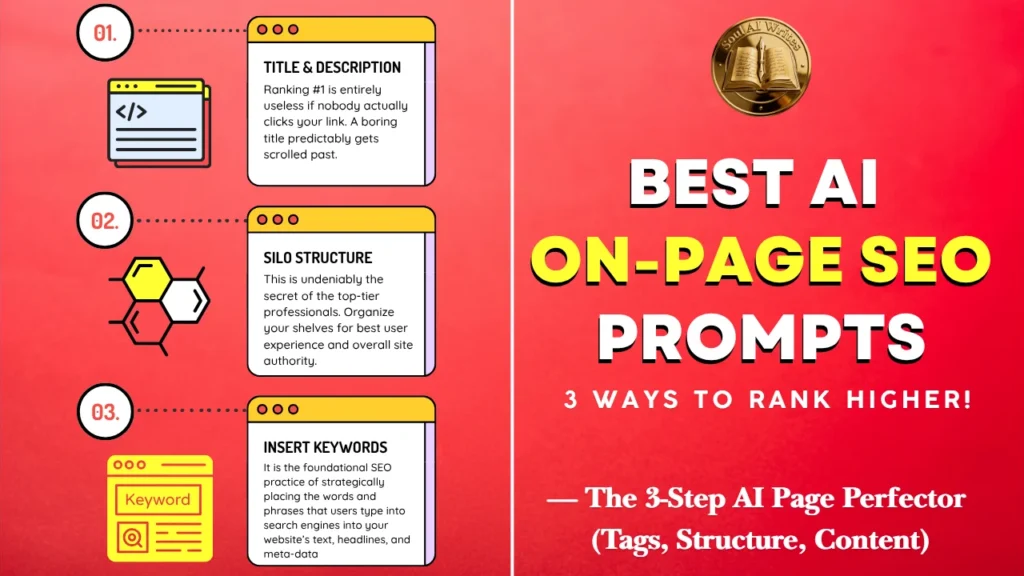
Best AI On-Page SEO Prompts: 3 Ways to Rank Higher!
The AI Page Perfector: How to Make Google Fall in Love With Your Content Most…

Want to Dominate Maps? 5 AI Local SEO Prompts!
The AI Local Hero: How to Beat Big Brands in Your Neighborhood If you safely…

Best AI Ecommerce SEO Prompts: 4 Secrets to Scale Fast!
The AI Store Manager: How to Write 1,000 Product Descriptions Without Losing Your Mind Running…



Leave a Reply