

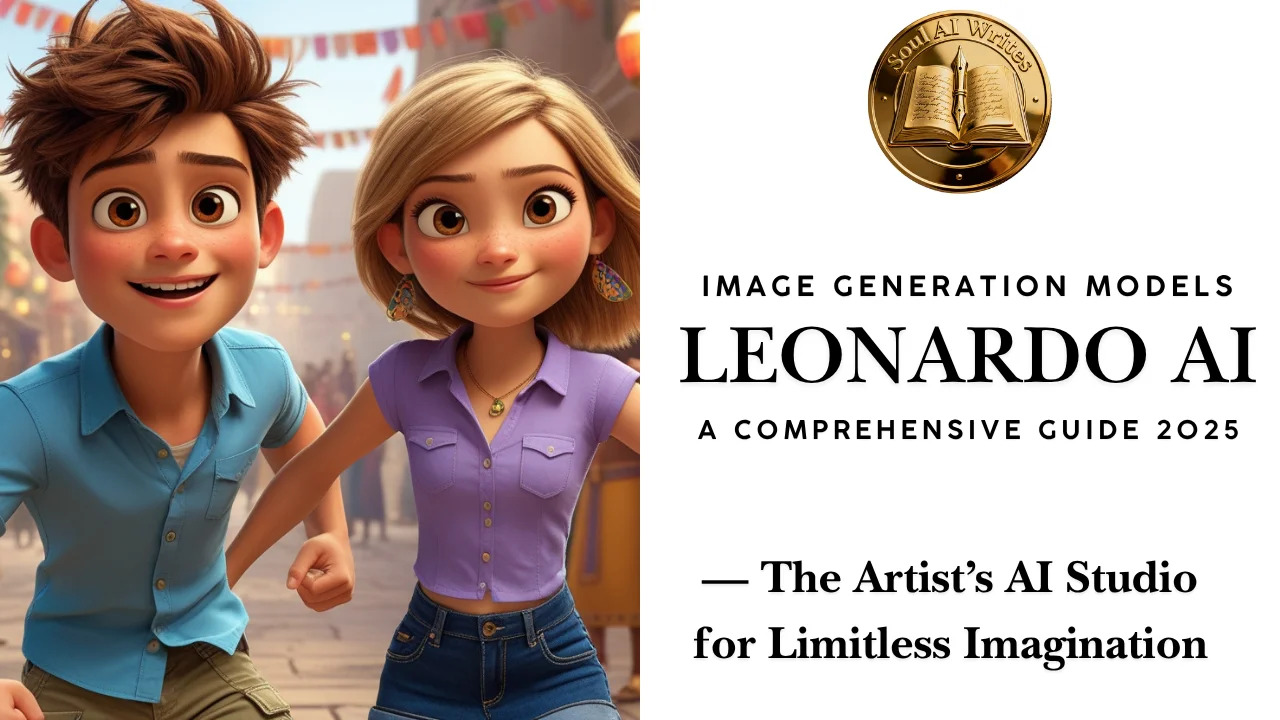

Leonardo AI November, 2025 Full Guide — explore 20 image generation models, tutorials, pricing, features, and expert reviews.

Introduction
As the Global Chief AI Analyst at SoulAI Writes, I’ve spent months testing every image model Leonardo AI has launched — across genres like realism, cinematic art, concept illustration, and stylized design.
I’ve personally generated over 5,000 images using Leonardo’s platform — experimenting with every single model, setting, ratio, and lighting option available.
And after thousands of generations, retouches, and feature trials, I can confidently say this: Leonardo AI isn’t just another image generator — it’s a professional-grade creative studio powered by 20 deeply specialized models that cater to everything from anime to photorealism to cinematic art direction.
This full 2025 guide walks through:
- Every image model (Lucid Origin to Phoenix, Flux, Nano Banana & Legacy sets)
- Tutorials & image ratio recommendations
- Pricing & subscription structure
- My personal rankings, ratings & expert verdicts.
What Makes Leonardo AI Different
Leonardo AI stands out because it’s built for artists, marketers, designers, and AI creators who need more than one visual style.
Each model behaves differently, trained on unique datasets that control light physics, skin realism, cinematic tone, brushstroke precision, and aesthetic mood.
Why it’s different:
- 20+ models specialized for unique outputs.
- Control over aspect ratio (1:1, 9:16, 16:9, 3:4, 4:3, 4:5, 2:3, 2:1, 1.85:1, 2.4:1).
- High-resolution upscaling and lighting control.
- Layer blending, style reference, and negative prompt precision.
- Real-time refinement and live preview.
- Community-trained finetunes for custom consistency.
Leonardo AI — 20 Image Generation Models (2025)
Below is a complete breakdown of Leonardo’s 20 AI models, grouped into Featured, Core, and Legacy sets.
Featured Models
1. Lucid Origin — The Crown Jewel (My Top Pick)
Style: Hyper-real, balanced cinematic realism.
Best for: Portraits, concept photography, ultra-detailed character design.
Strength: Excellent prompt adherence and text rendering for HD output.
My Verdict: Lucid Origin produces breathtaking clarity with balanced skin tone, lighting, and realistic reflections. Every image feels emotionally rich and polished.
⭐ Rating: 5/5 — “The pinnacle of AI realism in 2025.”

2. Nano Banana — The Artistic Powerhouse (Non-Leonardo)
Style: Cross-platform creative realism model.
Best for: Artistic portraits, cinematic stills, fantasy realism.
Strength: Smart, context-aware edits and consistent, high-quality visuals.
My Verdict: Non-Leonardo but exceptional — a must-have add-on for artistic creators.
⭐ Rating: 4.9/5
3. Lucid Realism — Runner-Up for Ultra Realism
Style: Photographic precision, natural skin lighting, realistic color balance.
Best for: Product photography, beauty shots, corporate and fashion imagery.
Strength: Creating cinematic shots and best for pairing with video generation.
My Verdict: Exceptional color fidelity — it handles sunlight, reflection, and ambient shadows with natural depth.
⭐ Rating: 4.8/5

Core & Advanced Models
1. Flux Dev
Style: Dynamic development version of Flux series.
Best for: Experimental art, environments, and cinematic storyboards.
Why It Stands Out: Incredible at visual storytelling — adds depth, fog, and motion simulation.
⭐ Rating: 4.7/5
2. Flux.1 Kontext Max
Style: Context-aware cinematic realism.
Ideal Use: Sci-fi, landscape, fantasy scenes.
Why It Stands Out: Advanced object coherence — characters stay consistent frame to frame.
⭐ Rating: 4.6/5
3. Flux.1 Kontext
Style: Balanced between realism and stylization.
Strength: Excellent depth-of-field and atmospheric tone.
⭐ Rating: 4.5/5
4. Flux Schnell
Style: Fast and light model for instant previews.
Best for: Quick concepts or thumbnail drafts.
⭐ Rating: 4.4/5
5. Phoenix 1.0 — Creative Runner-Up
Style: Color-rich cinematic model.
Best for: Mood lighting, product visuals, and surreal realism.
Why It Stands Out: Phoenix handles complex textures — chrome, skin, glass — beautifully.
⭐ Rating: 4.8/5
6. Phoenix 0.9
Style: Legacy cinematic base.
Pros: Balanced composition, solid shading.
⭐ Rating: 4.3/5
7. Ideogram 3.0 — Runner-Up (Non-Leonardo)
Style: Logo, typography, and graphic composition.
Best for: Branding, minimal design, and poster visuals.
⭐ Rating: 4.7/5
8. GPT-Image-1
Style: Balanced general-purpose visual model.
Use Case: Concept art, product designs, realistic portraits.
⭐ Rating: 4.4/5
Legacy Models (The Classics)
| Model | Style | Use Case | My Rating |
|---|---|---|---|
| Anime | Stylized 2D art | Character design, comics | ⭐ 4.6 |
| Cinematic Kino | Film-grade tone | Movie posters, storytelling | ⭐ 4.8 |
| Concept Art | Pre-visualization art | Game & film concept work | ⭐ 4.7 |
| Graphic Design | Branding & layout | Marketing visuals | ⭐ 4.5 |
| Illustrative Albedo | Artistic sketch-to-render | Art illustration | ⭐ 4.4 |
| Leonardo Lightning | Ultra-fast model | Instant previews | ⭐ 4.3 |
| Lifelike Vision | Portrait photo realism | People & lifestyle | ⭐ 4.7 |
| Portrait Perfect | Headshot perfection | Professional profile images | ⭐ 4.8 |
| Stock Photography | Corporate imagery | Realistic stock visuals | ⭐ 4.5 |
Aspect Ratios & Resolution
Leonardo supports all major ratios:
- 1:1 (Square) — Best for portraits, products.
- 16:9 (Landscape) — Cinematic, YouTube thumbnails.
- 9:16 (Vertical) — Mobile content, Reels, Stories.
- 2:3 or 3:4 — Pinterest, posters, print, and editorial layouts.
- 4:5 or 4:3 — Instagram & Twitter/X
- 1.85:1 or 2.4:1 or 2:1 — Film > Cinema, Wide & Television
Resolution
- 480P, 720P, 1080P, HD and Ultra-HD
Pricing & Plans
| Plan | Monthly | Yearly | Tokens |
|---|---|---|---|
| Free | $0 | – | 150 Fast Tokens daily for quick creations |
| Apprentice | $12 | 8,500 Fast Tokens Monthly | |
| Artisan Unlimited | $30 | 25,000 Fast Tokens Monthly | |
| Maestro Unlimited | $60 | 60,000 Fast Tokens Monthly |
Leonardo AI Tutorial — Step-by-Step
1. Enter Prompt: Write descriptive, emotional prompts.
2. Choose Model: Pick Lucid Origin or any of the 20 models.
3. Adjust Settings:
– Aspect ratio
– Prompt enhance
– Lighting & style guides
– Image size
– Generation Mode
– Number of Images
4. Generate & Refine: Use ‘Image Guidance’ and ‘Negative Prompt’ for precision.
5. Enhance: Apply the “Detail” and “Lighting Boost” sliders.
6. Upscale or Remix: For HD prints or social visuals.
7. Download, Save or Share: Export to PNG or use Leonardo Canvas for further editing.
Why Leonardo’s Models Beat Other Generators
- Model diversity: 20 specialized styles — unlike Midjourney’s single core model.
- Speed: Faster than Stable Diffusion pipelines.
- Style retention: Keeps subjects consistent between prompts.
- Customization: Layered prompt control, unlike DALL·E’s simplicity.
- Integrated design workflow: Built-in editor, background remover, lighting adjuster.
My Experience & Review
Over the past year, Leonardo AI has become my go-to image generator — not just for speed but for the sheer diversity of style output.
Whether I’m crafting hyper-realistic portraits, cinematic landscapes, anime art, or product mockups — there’s a model perfectly tuned for the job.
Lucid Origin remains my #1 recommendation for any creator who wants photographic excellence with artistic flair.
If you love stylized realism, experiment with Lucid Realism, Phoenix 1.0, or Flux Dev.
And if you want brand graphics or poster aesthetics — Ideogram 3.0 and Graphic Design models perform beautifully.
Limitations
- Occasional over-saturation in Phoenix models.
- Legacy models lack fine edge detail compared to Lucid series.
Conclusion — My Final Verdict
After testing all 20 models, generating thousands of images, and experimenting with every slider, I can confidently say:
Leonardo AI is the most complete image generation ecosystem of 2025.
It’s faster, more creative, and more consistent than any other generator.
The platform isn’t just about making images — it’s about giving creators an artistic partner that understands mood, emotion, and realism.
- Top Model: Lucid Origin — unparalleled balance of realism + artistry.
- Runner-Ups: Lucid Realism, Flux Dev, Phoenix 1.0.
- Best Non-Leonardo: Nano Banana.
- Non-Leonardo Runner-Up: Ideogram 3.0.
If you want cinematic art, magazine-quality realism, or professional digital compositions — Leonardo AI is the place to be in 2025.
Overall Rating: 4.9 / 5
My Recommendation:
“Master one model at a time — and Leonardo AI will reward you with results that look truly human-made.”
Read more Articles

AI Email Writing Prompts: Get 10x More Replies Fast!
The AI Email Engine: How to Write Emails That Actually Get Replies Email is the…
AI Course Writing Prompts: 4 Steps to build 10x Your Empire Overnight!
AI Course Writing Prompts: How to Turn Your Brain into a Business Overnight We are…

AI Content Writing Prompts: 7 Steps to Multiply 10x Faster
AI Content Writing Prompts: How to Publish Like a Media Empire (Solo) AI Content Writing…
Higgsfield Cinema Studio 2.0: Are You Directing AI Movies?
Are You Still Making Basic AI Videos? How Higgsfield Cinema Studio 2.0 Builds Real Hollywood…
AI Book Writing Prompts: 4 Steps to a Best-Seller (2026)
AI Book Writing Prompts: Can You Write a Best-Seller in a Weekend? AI Book Writing…

AI Blog Writing Prompts: 7 Steps to Viral Content (2026)
The Ultimate AI Blog Writing Workflow: Are You Using the Right Prompts? AI Blog Writing…








Leave a Reply